



What Equipment Do You Need to Know How to Fish for Bass Successfully?
Bass fishing sounds simple until you're standing at the water's edge with the wrong gear, getting absolutely nothing. No bites. No strikes. Just a quiet lake and a growing sense that maybe everyone else knows something you don't.
Here's the thing. Learning how to fish for bass isn't just about reading the water or knowing when to go out. It starts earlier than that. It starts with gear. Get the equipment right, and everything else suddenly clicks into place. Get it wrong, and even perfect conditions won't save you.
This guide breaks down exactly what equipment matters, why it matters, and what to actually look for when buying it.
Quick Gear Summary: Bass Fishing Starter Kit
Rod: 6–7 ft, medium-heavy, fast action
Tip: Spinning rod is easiest to start
Reel: Spinning reel, size 4000–5000
Tip: Avoid baitcasting until comfortable
Line: 8–14 lb monofilament
Tip: Add fluorocarbon leader for clarity
Hooks: Size 1 to 2, offset worm hooks
Tip: Match hook to bait size
Weights: Bullet sinkers, 1/4 to 3/8 oz
Tip: Texas rig for weedy areas
Lures: Crankbaits, spinnerbaits, soft plastic worms
Tip: Carry multiple types
Terminal Tackle: Snap swivels, split shot sinkers
Tip: Have extras of everything
Accessories: Pliers, tackle box, license
Tip: Never skip the license
#1 The Rod: Your Most Important Tool
Ask ten experienced bass anglers what rod they'd grab first and most will say the same thing. A medium to medium-heavy spinning rod, somewhere between 6 and 7 feet, with a fast action tip.
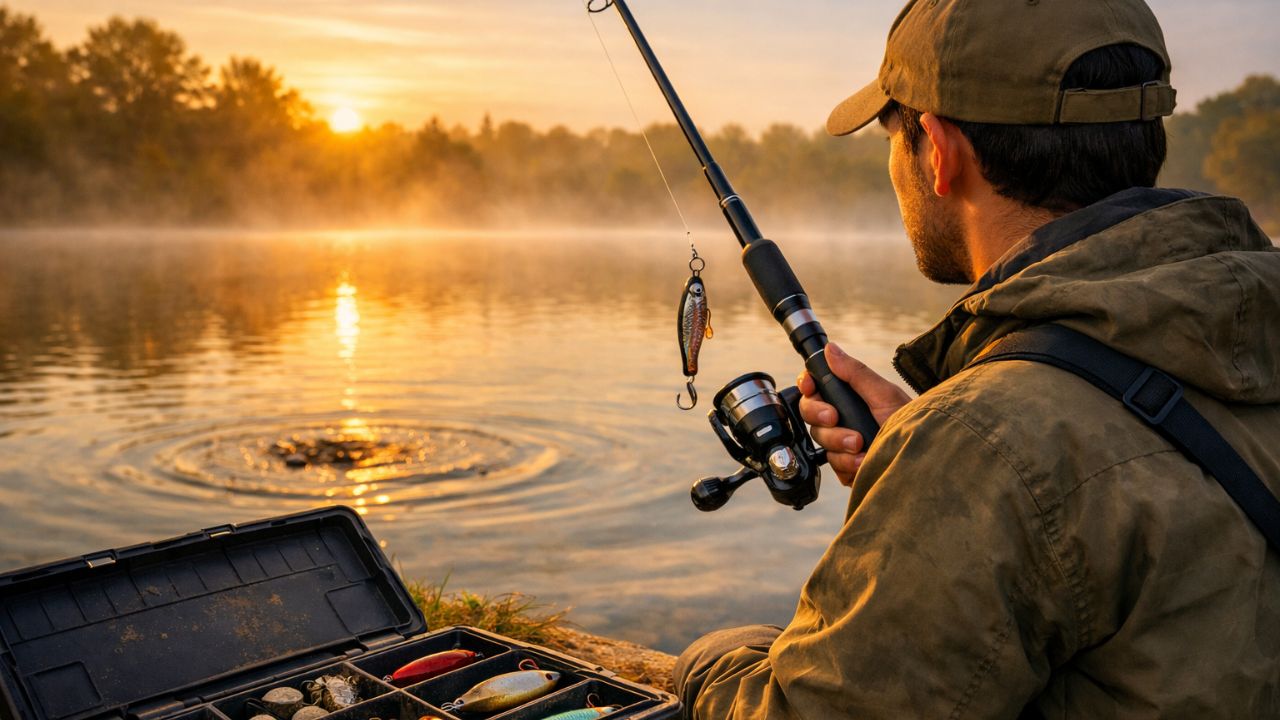
For a good all-around setup, a 6 or 7-foot spinning rod that's medium to medium-heavy with a fast action tip is widely recommended for bass fishing. That combination gives you sensitivity (so you feel the bite the moment it happens), plus enough backbone to set the hook hard and pull fish away from cover.
What do these terms actually mean?
Rod Power refers to how much force is needed to bend the rod. Medium-heavy is the sweet spot for bass because the more cover you have in your waters (weeds, brush, etc.), the more power you need in a rod to pull bass away from cover.
Rod Action tells you where the rod bends under pressure. Fast action rods bend mostly near the tip, which makes them more sensitive and gives sharper hooksets. A general rule of thumb is to lean into faster rods when using single hooks and more moderate rods when using treble hooks.
And length? Six or seven-foot rods are best when fishing from a boat, while eight- to fourteen-foot rods work better for shore fishing.
#2 The Reel: Spinning vs Baitcasting
This debate never really ends in the bass fishing world. But for anyone starting out, the answer is pretty clear.
Start with a spinning reel. Spinning reels are easy to control, flexible in their application, and plenty strong enough to pull in big fish if you pick the right one.
Spincast reels are inexpensive and easy to use but only suitable for small fish, while spinner reels are stronger, smoother, and more durable. Baitcasting reels offer excellent control but are best suited for experienced anglers.
Once you've spent a full season on a spinning setup and feel comfortable with casting and fighting fish, then baitcasting starts to make sense. The baitcaster provides greater accuracy for larger baits and opens up techniques like pitching and flipping, which can be extremely effective for bass.
Key reel specs to look for:
Spec: Gear Ratio
Recommended Range: 5.2:1 to 6.2:1
Why It Matters: Fast enough for most bass lures
Spec: Reel Size
Recommended Range: 4000 to 5000
Why It Matters: Matches medium-heavy rod setups
Spec: Drag System
Recommended Range: Smooth, consistent
Why It Matters: Prevents line breaks on hard runs
Spec: Build Material
Recommended Range: Aluminum or graphite
Why It Matters: Durability without excess weight
Browse the full selection of fishing reels at Basin Sports to find spinning reels across every price point that match these exact specs.
#3 Fishing Line: The Connection That Can't Break
Line choice is something a lot of beginners overlook. Which is honestly a mistake, because the wrong line loses fish.
There are three main types worth knowing:
Monofilament (Mono): The classic choice. Monofilament offers shock resistance, preventing sudden movements of the fish from breaking your line. In hard fights, especially with light lines, plenty of shock resistance can be the difference between landing a nice bass and having your line snap. For beginners, 8 to 14-pound monofilament is a solid all-around choice.
Braided Line: Stronger for its diameter and has zero stretch, so sensitivity goes way up. Braid can be tricky for beginners since it's slippery, more expensive, and requires careful knot tying. Ten to 15-pound braid paired with a fluorocarbon leader works well if you want more sensitivity and strength.
Fluorocarbon: Nearly invisible underwater. Great as a leader material when you want the bait to look as natural as possible. Often used with a braid as a combo setup.
A good starting point: Pair a medium to medium-heavy spinning rod with a reel rated between 4000 and 5000 and an 8 to 14-pound monofilament line. This is the right weight for most bass lures and bait rigs.
#4 Hooks, Weights, and Terminal Tackle
Nobody talks about terminal tackle enough. But it's what connects everything.
Hooks: Size matters more than most beginners think. Too big means the fish won't get hooked, while too small means the fish will probably swallow the hook instead. For bass, hooks in the size 1 to 2 range are commonly used, depending on the bait.
Weights (Sinkers): These get your bait to the right depth. The most common types for bass fishing include bell weights (excellent for placing bait deep in the water), bullet sinkers (best used in bass fishing as they don't get easily caught in vegetation), and split shot sinkers (which allow for quick and easy adjustments to weight on the line).
Bullet weights in particular are a staple for Texas rig setups, which are one of the most weed-friendly bass presentations around.
Snap Swivels: These little connectors prevent line twist and make lure changes faster. A tackle box should include hooks, weights, and snap swivels as part of any complete bass fishing kit.
Still not sure when to add weight and when to skip it? This deeper breakdown on whether fishing lures need weights covers all the situations where it actually makes a difference.
#5 Lures and Bait: What Actually Gets Bass to Bite
This is where bass fishing gets genuinely interesting. And honestly a little overwhelming at first. The lure aisle at any tackle shop can feel like sensory overload.
Lures break down into two main categories: hard baits and soft plastics. Plus a third category that doesn't quite fit either.
The two main categories of artificial lures are hard baits and soft plastics, while skirted baits like spinnerbaits, buzzbaits, vibrating jigs, and other jigs don't really land in either category.
Here's a practical breakdown:
Hard Baits:
Crankbaits: Designed to mimic baitfish. Retrieve them steadily, and they wobble through the water. Crankbaits and spinnerbaits are among the best starting gear lures for bass fishing.
Topwater Poppers: Work on the surface. Watching a bass explode on a surface lure is one of the most exciting moments in fishing. Not an exaggeration.
Lipless Crankbaits: A good lipless crankbait wriggles enticingly when retrieved and really triggers feeding responses in bass.
Soft Plastics:
Plastic Worms: The single most versatile bass bait ever made. Texas-rigged with a bullet weight, they work almost anywhere.
Ned Rig: A finesse setup using a small soft plastic on a mushroom-head jig. Surprisingly effective when bass aren't cooperating.
Drop Shot Rigs: Great for deeper water situations.
Skirted Baits:
Spinnerbaits: Flash and vibration attract bass in murky water. A go-to in low-visibility conditions.
Jigs: Probably the most consistent big-bass producer. Slow down, feel the bottom, and work them through the cover.
A beginner's tackle box should have at least a few of each category to cover different situations on the water.
And since lure choice shifts dramatically with the seasons, it's worth reading up on the top bass fishing lures for every season to know exactly what to tie on month by month.
#6 The Tackle Box: Keep It Organized
A tackle box sounds obvious, but the organizational system matters. A tackle box stores all fishing gear and accessories in distinct compartments, protecting them from environmental hazards such as salt and moisture.
Go for something with adjustable dividers and enough compartments to separate hooks, weights, lures, and terminal tackle. Losing a good hook at the bottom of a disorganized bag in the middle of a fish-blowing moment is its own particular kind of frustration.
Accessories That Actually Matter
A few extra items that make the whole experience smoother:
Needle Nose Pliers: A pair of needle nose pliers is an absolute must for hook removal and handling gear on the water. They're also invaluable for crimping split shots and straightening bent hooks.
Fishing Scale with Tape Measure: Optional but genuinely useful for logging catches and bragging rights.
Fish Finder / Sonar: Not essential for absolute beginners, but worth considering once the basics are down. Sonar-enabled tools that cast from the bank and display results on a phone are now available for anglers without a boat. The technology has gotten genuinely accessible.
Fishing License: A fishing license is one of the ten most essential items for any beginner fishing kit. Every state requires one. Check local regulations before heading out.
Where to Fish Matters To
Even perfect gear produces nothing in the wrong spot. Bass have habits. Bass stick close to the same spots where smaller fish tend to hide, including areas with a lot of aquatic flora, around fallen trees, under docks and piers, and near sudden drop-offs or structures hidden beneath the water.
Match the lure to the structure. A weedless Texas-rigged worm for vegetation, a crankbait along rocky drop-offs, a topwater popper near dock edges at dawn. Reading the water comes with time, but knowing the gear allows the learning to actually happen.
FAQs
What is the best rod for bass fishing?
A medium to medium heavy rod with fast action is generally ideal for bass fishing.
Are spinning reels better for beginners?
Yes. Spinning reels are easier to use and handle lighter lures effectively.
What type of line works best for bass fishing?
Monofilament is good for beginners, while fluorocarbon and braided lines offer more sensitivity and strength.
Do you need expensive gear to catch bass?
No. Quality mid-range equipment works well. Technique and proper setup matter more than price.
Final Thoughts
Gear doesn't make an angler. But bad gear absolutely breaks one. The goal of starting out isn't to own everything. It's to own the right things and understand why they work. A solid spinning setup, a handful of proven lures, the right line, and organized tackle gets anyone on the water in a real position to learn how to fish for bass the right way.
Build the foundation first. The gear obsession comes naturally after the first few good days on the water.
Once bass fishing starts to feel comfortable, plenty of anglers find themselves curious about other styles too. The fly fishing for beginners guide is a solid next read for anyone who wants to branch out on the water.