




What to Bring Camping: The Only Checklist You’ll Ever Need
Forget your sleeping bag on a camping trip and you’re in for a cold, long, miserable night with zero pity from anyone around the fire.
And yet, the sleeping bag rarely gets forgotten. You know what does? The can opener. The toilet paper. The headlamp batteries. The dry kindling when it’s been raining for three days. The small stuff. Always the small stuff.
We’ve spent years watching people come into Basin Sports mid-trip for things they swore they packed. There’s a pattern to it. And this piece is our attempt to break that pattern for good, not with another 300-item mega list that makes your eyes glaze over, but with the kind of real talk you’d get from a friend who camps a lot and has made every mistake worth making.
Before You Even Touch Your Gear Bag
Most people open a bag and start throwing things in. That’s how you end up at a campsite with four pairs of shoes and no matches.
The single most useful question you can ask yourself before packing anything is this: am I driving to my campsite or carrying everything on my back? That one answer changes nearly every item on your list. Car camping and backpacking are two completely different sports. They just happen to both involve sleeping outside.
If you’re car camping, weight is irrelevant. Bring the cast iron pan. Bring the full-size cooler. Bring the camp chairs and the bluetooth speaker and the extra hoodie you’ll probably never wear
If you’re backpacking, every single ounce is a negotiation. Nothing earns its spot unless it genuinely pulls its weight. Your sleeping system, your shelter, your cook kit. Each one gets scrutinized.
The table below covers the ten items where this distinction matters most. Use it as your first filter before anything else.
Item: Tent
Car Camping: Full-size 3-season tent
Backpacking: Freestanding, under 4 lbs
Item: Sleep
Car Camping: Any bag + thick air mattress
Backpacking: Lightweight pad + down bag
Item: Cooking
Car Camping: 2-burner stove + cast iron
Backpacking: Single stove + one pot
Item: Cooler
Car Camping: Hard-sided, 40–65 qt
Backpacking: Skip it, go dehydrated
Item: Chairs
Car Camping: Bring them, enjoy them
Backpacking: Leave at home
Item: Water
Car Camping: Gallon jugs are fine
Backpacking: Filter or purify on trail
Item: Clothing
Car Camping: Pack freely, bag it loose
Backpacking: 3-layer system, max 3 days
Item: Shoes
Car Camping: Trail shoes + camp sandals
Backpacking: One broken-in boot pair
Item: Lighting
Car Camping: Lantern + headlamp
Backpacking: Headlamp only
Item: Entertainment
Car Camping: Cards, games, speaker
Backpacking: Book or journal
For both setups, Basin Sports’ camping accessories section is worth a look before you buy anything. No fluff, no inflated brand premiums, just the gear that actually gets used.
Your Tent and Sleep Setup (And Why You Should Practice at Home)
Sleep is where camping trips quietly fall apart. Not in a dramatic way. In a slow, grinding, two-bad-nights-in-a-row way that turns a fun trip into something you’re counting the hours to end.
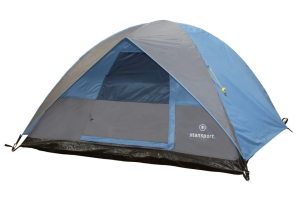
Your tent is your home out there. One thing that sounds obvious but almost nobody does: set it up in the backyard before you go. Ten minutes at home. It saves forty minutes of pole-fumbling in the dark when you arrive hungry, tired, and losing daylight. We’ve watched too many people skip this and regret it.
The sleeping bag matters more than the pad for most people, but the pad is not optional. Ground cold is genuinely sneaky. Even in summer, sleeping on the earth pulls warmth out of your body faster than the air temperature suggests. A decent pad is not an upgrade. It's a basic necessity.
Tent rated for at least one season tougher than you expect (weather has opinions)
• Sleeping bag rated 10 degrees below your overnight low, not the high
• Sleeping pad, foam or inflatable, at least R-value 2 for summer trips
• Ground cloth or footprint to protect the tent floor from rocks and moisture
• Mallet or hammer, tent stakes on hard ground need more persuasion than your shoe
• Extra guy lines if there’s any chance of wind or rain
Clothing: Pack Less Than You Think You Need
Everyone overpacks clothes for camping. It’s a universal truth. You pack for every possible scenario and come home with half your bag untouched.
The layer system is how experienced campers get this under control. Three layers handle almost everything. A base layer that moves sweat away from your skin. A mid-layer, usually fleece, that keeps you warm. An outer shell that blocks wind and rain. That’s it. Mix those three and you can handle cool mornings, hot afternoons, cold nights, and a sudden shower without dragging along your entire wardrobe.
The thing almost everyone regrets not bringing: a warm hat and light gloves, even in summer. Nights near water or at elevation get genuinely cold. They weigh nothing. They take up no space. And at midnight when you’re sitting by a dying fire, you’ll be very glad you tossed them in. Here’s a comprehensive list:
• Moisture-wicking base layer, top and bottom, not cotton
• Fleece or insulated mid-layer jacket
• Waterproof or wind-resistant outer shell
• Two to three pairs of hiking socks, wool if possible
• Sturdy closed-toe shoes or broken-in hiking boots
• Camp sandals for around the site, your feet will thank you
• Warm hat and light gloves
• Sun hat and sunglasses for daytime
• Swimsuit if you’re near water
• One full change of clothes per day, plus one spare for emergencies
The Camp Kitchen: Where Everything Gets Forgotten
Food is the thing people look forward to most about camping. It’s also the category with the highest forgotten-item density of anything you’ll pack. You remember the burgers. You forget the spatula. You pack the coffee. You forget the mug. It happens to everyone, including the people who’ve been camping for decades.
The best thing you can do is prep at home. Chop vegetables on Friday afternoon. Marinate proteins. Mix your pancake batter in a squeeze bottle. The work you put in before you leave means Saturday morning at the campsite feels like an actual breakfast instead of a 7am survival exercise while the kids are already complaining.
For car camping, you have real freedom here. A two-burner stove, a cast iron pan, and a proper cooler opens up almost any meal. For backpacking, none of that travels. You’re working with a single lightweight stove, one pot, dehydrated food, and water you’ve filtered yourself. Both approaches are great. They’re just completely different games.
• Camp stove and at least one spare fuel canister
• Lighter and waterproof matches as backup, carry both
• One pot and one pan (cast iron for car camping, titanium for backpacking)
• Spatula, tongs, and a sharp camp knife
• Cutting board
• Plates, bowls, mugs, and utensils for every person
• Biodegradable dish soap and a small scrub sponge
• Cooler with ice packs or frozen water bottles
• Dry food storage or bear canister where the rules require it
• Can opener and bottle opener, the single most forgotten item in the history of camping
• Trash bags, bring more than you think you need
• Paper towels, aluminum foil, and zip-lock bags in multiple sizes
True story: we once drove 45 minutes back to get a can opener. Now there’s a permanent one in the camp bag, year-round, no exceptions, non-negotiable.
Safety and Navigation: The Stuff You Hope Not to Use
Nobody packs a first aid kit thinking they’ll need it. But blisters, cuts, bug bites, and twisted ankles are more common on camping trips than people expect. Having a kit and knowing where it is turns a minor inconvenience into just that, a minor inconvenience.
A headlamp is non-negotiable. Not a flashlight. A headlamp, so both hands are free when you’re setting up camp at dusk, cooking dinner, or walking to the bathroom at 2am over uneven ground. Get one with a red light mode. Your night vision will thank you. The cheap ones work just as well as the expensive ones for most trips.
Navigation trips people up more than almost anything else in the backcountry. Cell service is unreliable in most campgrounds and basically nonexistent once you’re a mile from any trailhead. Download your offline maps before you leave. For anything remote or multi-day, a paper map and compass are not outdated, they’re just insurance you hope you never need.
• First aid kit: bandages, antiseptic wipes, blister pads, pain relief, tweezers
• Headlamp with fresh or fully charged batteries
• Backup lantern for general camp lighting
• Bug repellent with DEET or picaridin
• Sunscreen SPF 30 minimum
• Offline maps downloaded before you lose signal
• Paper map and compass for any backcountry or multi-day trip
• Multi-tool or Swiss army knife
• Duct tape, it fixes an implausible number of things
• Emergency mylar blanket, weighs nothing, can save your life
• Prescription medications in a clearly labeled bag
The Most Forgotten Camping Items (Seriously, Check These)
The most forgotten camping items are never the obvious things. Nobody forgets the tent. The things that get left behind are the small, unsexy, supporting cast items that nobody thinks about until they desperately need them at 7pm in the middle of nowhere.
Based on years of watching campers come back mid-trip for things they swore they packed, here’s the real list:
1. Can opener and bottle opener
2. Toilet paper and a small trowel for backcountry situations
3. Hand sanitizer
4. Extra batteries for lanterns and headlamps
5. Fire starters or dry kindling, never assume you’ll find dry wood
6. Sunglasses
7. Clothespins and a short length of paracord
8. Zip-lock bags in multiple sizes, these solve fifteen problems
9. A small dustpan and brush for clearing out the tent floor
10. Wet wipes for quick cleanups when water isn’t nearby
11. A ground sheet for sitting outside without getting wet
12. A power bank for your phone
Print this list and physically check things off as you load the car. A written checklist catches what a mental one misses. Every single time.
What NOT to Bring Camping
Nobody talks about this side of packing. Overpacking is its own kind of misery. You spend the first hour at the campsite digging through bags you can’t find things in. You haul gear you never touch. You drive home with half the bag still sealed.
Here’s an honest verdict on the things that end up in the bag out of habit, not actual need.
• Giant cotton hoodies. They get damp and stay damp. A fleece mid-layer does the same job with a fraction of the moisture problem. Leave the hoodie at home.
• Full-size air mattress. They’re bulky, slow to inflate, and always develop a slow leak by night two. A quality sleeping cot or inflatable pad beats it every time.
• Five pairs of shoes. You need trail shoes and camp sandals. That’s it. Be honest with yourself before the third pair goes in the bag.
• Your entire spice collection. Salt, pepper, garlic powder, and olive oil cover 90% of camp cooking. The rest stays home.
• Valuables and irreplaceable things. Expensive jewelry, backup laptops, important documents. Things get wet, lost, or stolen at campsites. Leave them behind.
• Jars and heavy cans. Heavy and awkward. Repackage food into zip-lock bags or lightweight containers before you leave the house.
• Brand new, unbroken-in boots. This is how people get blisters on day one. Break in new footwear on day hikes before you rely on them for a multi-day trip.
• Firewood from home. Many campgrounds prohibit outside wood because it spreads pests and disease. Buy local firewood near the site instead.
If You’re Bringing Kids or a Dog
Kids change the packing math completely. You’re not just covering comfort anymore. You’re covering boredom, cold, fear of the dark, and the very real possibility that someone will need to go to the bathroom at the worst possible moment. A few extra things make an enormous difference.
Games and activities are as important as any gear for a family trip. A deck of cards, a frisbee, glow sticks for after dark. The evening hours at a campsite move slowly when there’s no screen to fill them. Fill them with something before you leave the house, not while you’re standing in a store two hours from the campsite.
Dogs have their own checklist. A leash, a backup tie-out stake, a collapsible water bowl, portioned food, and any medications. Some campgrounds have leash requirements and restricted areas. Worth checking before you show up.
For the Kids
• Extra snacks, more than you think you need, then double it
• Glow sticks or a kid-sized headlamp
• Cards, frisbee, or a small ball
• Kids’ sunscreen and child-safe insect repellent
• Waterproof bags for wet clothes and swimwear
For the Dog
• Leash and a backup tie-out stake
• Collapsible water and food bowls
• Food portioned for the full trip plus one extra day
• Any medications and proof of vaccinations if required
Summer vs Winter: Your List Isn’t the Same Both Times
Most camping checklists act like the weather never changes. Pack for July. Same list for November. That’s not how it works.
The core gear stays mostly consistent. Tent, sleeping bag, stove, kitchen kit, first aid. What shifts is the specific version of each item, plus a handful of additions that only make sense for the season you’re in. The table below is the clearest way to see it.
Item: Sleeping bag
Summer: 40–50°F rated bag
Winter: 0°F rated + fleece liner
Item: Clothing
Summer: Shorts, sun hat, bandana
Winter: Wool base layer, beanie, gloves
Item: Water
Summer: Extra 1L per person per day
Winter: Insulated bottle to stop freezing
Item: Sun
Summer: SPF 50+, UV sunglasses
Winter: Lip balm with SPF, goggles
Item: Rain
Summer: Light rain jacket
Winter: Waterproof everything
Item: Shoes
Summer: Trail runners fine
Winter: Insulated waterproof boots
Item: Fire
Summer: Basic fire starters
Winter: Extra starters + hand warmers
Item: Navigation
Summer: Offline phone maps
Winter: Paper map + compass backup
One thing most people underestimate for winter trips: hand warmers. They cost almost nothing, weigh even less, and at 25 degrees at 5am when you’re trying to get the stove lit, they feel like miracles.
Staying Clean Without Losing Your Mind
Camping doesn’t mean abandoning hygiene. It means simplifying it. Biodegradable soap, a microfiber towel, and a little common sense about where your greywater goes. You can feel clean and human even two days from the nearest shower.
The microfiber towel is the swap most people come around to eventually. It dries in a fraction of the time of a regular towel and takes up almost no space. Worth it every time.
• Toothbrush and toothpaste
• Biodegradable soap for body and dishes
• Microfiber towel, one per person
• Deodorant
• Feminine hygiene products if needed
• Wet wipes for between-wash cleanups
• Prescription medications in a clearly labeled bag
The Full List, All in One Place
Print this. Check things off as you load the car. Adjust for your trip type and season. And if you’re still hunting down any of these items, the camping accessories section at Basin Sports has most of what’s here.
Shelter and Sleep
• Tent with stakes, poles, and footprint
• Sleeping bag rated for overnight temps
• Sleeping pad or cot
• Repair tape
Clothing
• Base layer, mid-layer, waterproof shell
• Hiking boots or trail shoes, and camp sandals
• Warm hat and light gloves
• Socks, one pair per day plus two spares
• Sun hat and sunglasses
Camp Kitchen
• Stove, fuel, lighter, and waterproof matches
• Cookware, utensils, plates, and mugs per person
• Cooler, food storage, and can opener
• Biodegradable soap and trash bags
• Zip-lock bags in multiple sizes
Safety and Navigation
• First aid kit
• Headlamp with spare batteries
• Bug repellent and sunscreen
• Multi-tool and offline maps
• Emergency mylar blanket
Hygiene
• Toiletries and microfiber towel
• Wet wipes and hand sanitizer
• Prescription medications
The Ones That Always Get Forgotten
• Can opener and bottle opener
• Toilet paper and small trowel
• Extra batteries and a power bank
• Fire starters and dry kindling
• Duct tape and a short length of paracord
Here’s the honest truth about camping packing lists. Nobody gets it perfect every trip. Even people who’ve been doing this for years still occasionally stand at the campsite going, “where did I put the…”
But the gap between a great trip and a rough one is almost never the gear you forgot to buy. It’s the gear that’s sitting in your kitchen because you packed in a rush and trusted your memory over a list.
So before you zip that bag: when did you last check the overnight low at your destination? Because that number changes everything.
FAQs
1. What do first-time campers forget the most?
Almost always a can opener, toilet paper, hand sanitizer, or extra batteries. The big gear gets remembered because it’s obvious. It’s the supporting cast that slips through.
2. How do I know if I’m overpacking?
Lay everything out before it goes in the bag. If you can’t explain why a specific item is there, it probably doesn’t need to be. For backpacking, if your pack weighs more than 30% of your body weight, something has to come out.
3. Do I really need a bear canister?
Depends where you’re going. Many national parks and wilderness areas require them by law. Others just recommend them. Check the specific campground or trailhead rules before you go. If bears are actively managed at your site, hanging food from a tree is usually the minimum expectation.
4. How much water should I actually bring?
Two liters per person per day for drinking at minimum. Hiking or hot weather, double that. For backcountry trips, plan on filtering or purifying from natural sources. Bring a filter and tablets as backup.
5. What’s worth spending money on versus going cheap?
Invest in your sleeping bag, your headlamp, and your footwear. These three directly affect how comfortable and safe your trip is. Go budget on utensils, extra bags, and accessories. Basin Sports carries solid gear across both price points if you want to see the range before you buy.
6. Is it worth buying a printable checklist?
You don’t need to. The list at the end of this piece covers everything. Print it, laminate it, use it every trip. Five minutes of prep that saves a lot of scrambling later.